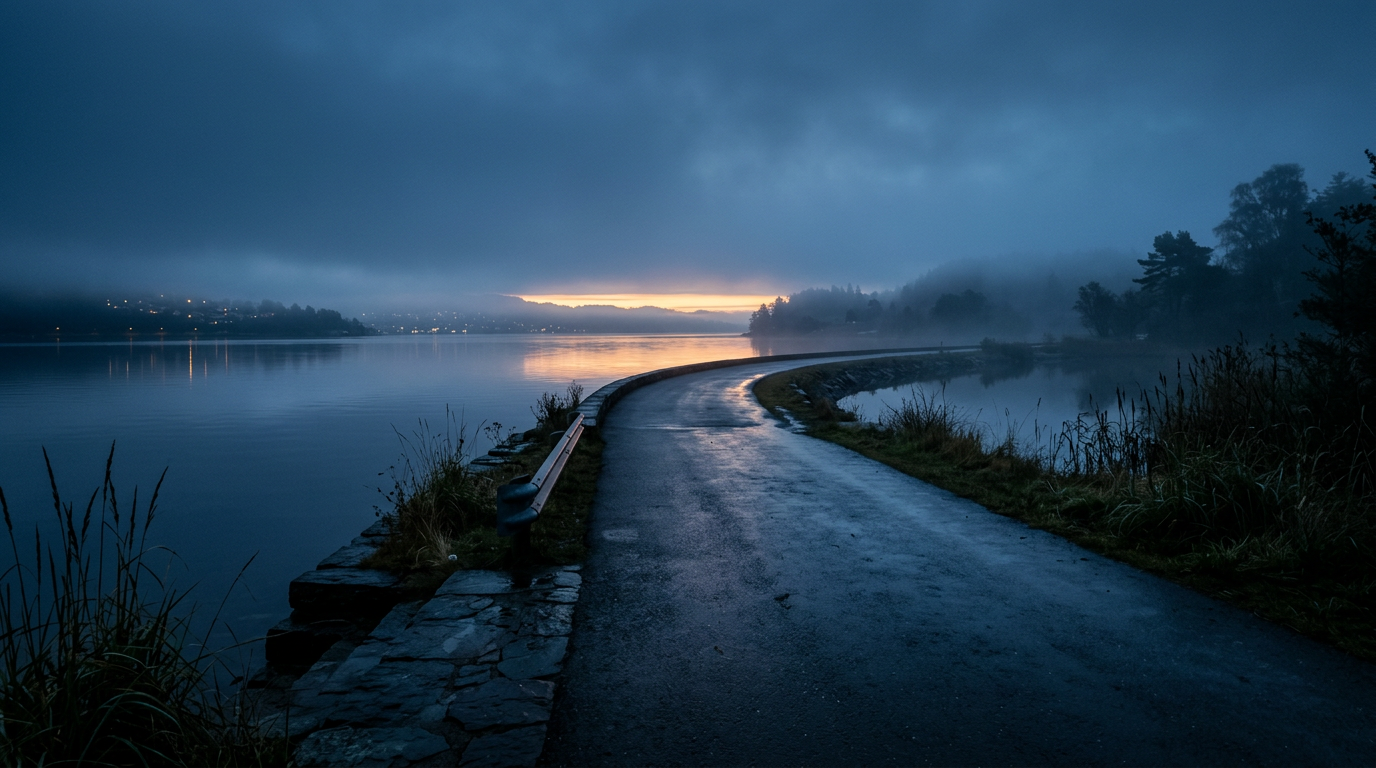
Walk count: one. The long way round, before the laptop was open and before a single file had a name.
I’ve been writing software for twenty-six years, and the habit I trust most has nothing to do with tooling. It’s the walk before the first commit. I didn’t always know why it worked. This morning I got a clearer look at it.
What I Meant to Build
I woke up with a plan, and the plan was busy. I wanted to add structure to the private feed: filters, a small summary strip, a way to sort entries by the kind of day they described. It was reasonable and tidy, and I could have scoped it before coffee.
Somewhere around the first corner I noticed that I wasn’t looking forward to it. When I’m excited about a build, I start talking to myself on the walk. This time I was only listing.
The Pace Sets the Question
Walking slows the questions down. At a desk, the question is what’s the fastest way to ship this? On foot, it turns into what is this thing actually for?
The feed is for me. It isn’t a product or a publication, and nobody needs to be guided through it. I don’t need to navigate my own days like a catalog. I need to open the iPad, see the last thing I wrote, and feel like I’m back in the room.
By the time the road bent toward the water, the plan had changed. Here is what the walk took out and put in:
- Out: the filter bar and the summary strip. They were solving a problem I don’t have.
- In: one full-bleed entry view, dark and quiet, with the writing given the whole screen.
- In: two small fields that belong to every daily post: the walk count and the music pick.
The Loom Moment
The idea that clicked had been loose for weeks. I knew I wanted the day’s music to sit somewhere in the entry, but I kept picturing it as metadata, a tag at the bottom, filed away like an afterthought.
Then I caught my own footsteps matching the song in my headphones, and the pieces slid together. The walk count and the music pick aren’t metadata. They describe the same thing, which is the pace of the day. One is how I moved and the other is what moved with me.
So they shouldn’t be tucked into a footer. They belong together at the top of the entry, as a single quiet line that sets the tempo before the first sentence begins. It’s a small decision. It was also the thread I’d been missing, and it pulled everything else straight. This is what the Loom does when it’s working: it doesn’t invent anything, it shows you where the threads were already crossing.
Music Pick: Khruangbin, “Maria También”
The track was already playing when I stopped overthinking. It’s loose-limbed and unhurried, with a bass line that seems to stroll rather than push. It sits at a pace where you can walk without trying to arrive anywhere. That’s rare in music. Most songs either rush you or ask you to stand still.
I let it run twice through the stretch along the water. That’s where the plan finally went quiet, and I stopped trying to improve the idea and just let it be simple.
Then, the First Commit
Back at the desk, the work was almost embarrassingly small. I stripped the layout down to what the entry needed and gave the pace line its own spot at the top. In Crystal terms, that meant fewer components and more room around the one that mattered. I kept the type generous and the background dark.
The first commit message was four words. It felt right.
What I’m Keeping
I don’t want to turn this into a rule. It’s a journal, and rules are for other people’s blogs. But I’ll note the pattern, because I keep rediscovering it:
When I start building before I’ve walked, I build what I can imagine at a desk. When I walk first, I build what I actually want. They’re rarely the same thing, and the second one is almost always smaller.
Tomorrow there’ll be another walk. I’ll see what it takes out.
Leave a Reply